
Mobile application · Smart geofencing
GeoAlarm
Location-based alarms triggered when entering or leaving defined areas. Balances accuracy and battery use, reduces false alerts and adapts to movement (stationary, walking or in a vehicle).

GeoAlarm
Smart geofencing
Brief description
GeoAlarm is a mobile application (React Native / Expo) for geofence-based alarms. It supports marking points of interest, grouping them by context and receiving notifications, with Firebase for synchronisation and messaging.
Problem it addresses
Alarms based only on time or continuous GPS can consume excessive power and produce inaccurate alerts. GeoAlarm adjusts sampling and radii to movement and signal quality to trigger alerts when entering or leaving the target area.
Value proposition
- Adaptive geofencing alarms that prioritise accuracy and battery efficiency.
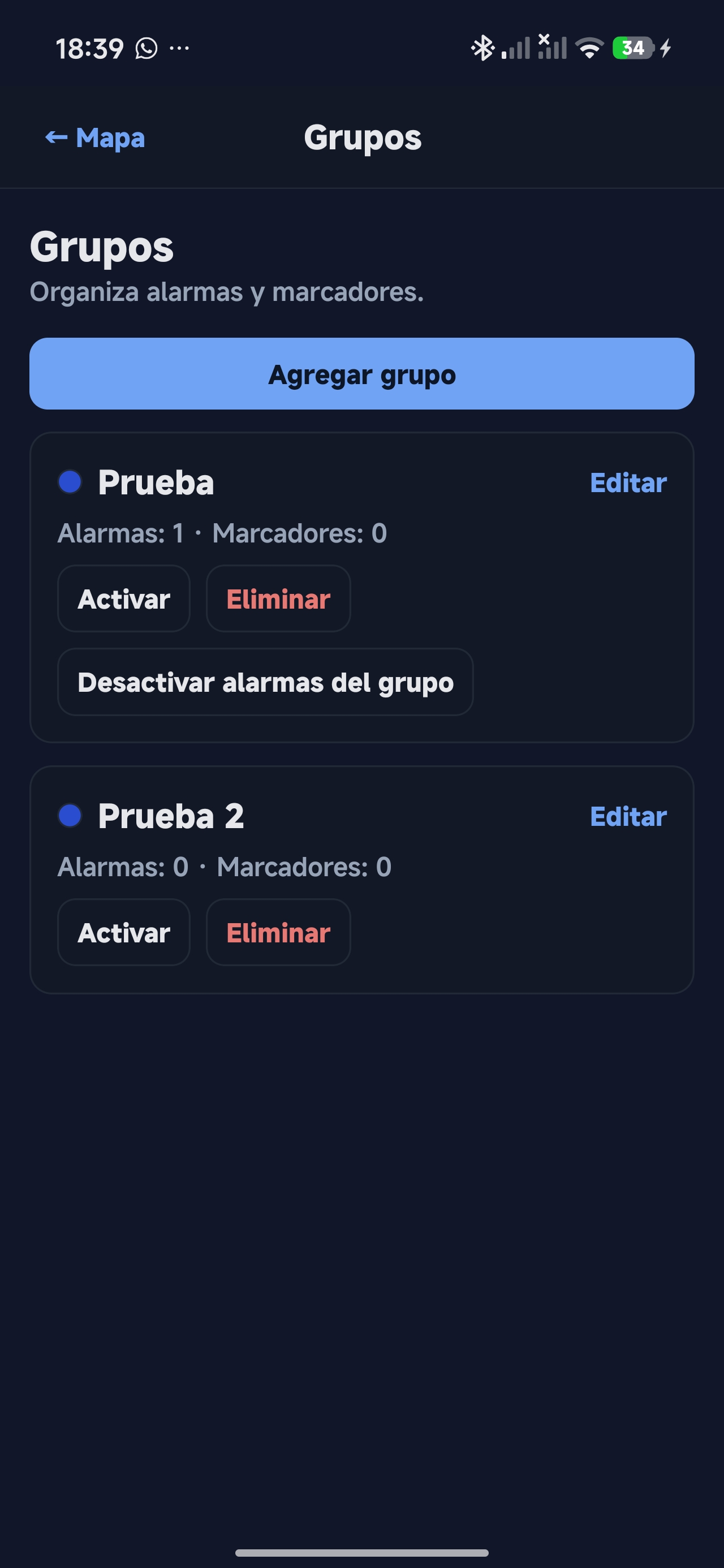
- Contexts and groups to organise places (work, study, errands and travel).
- Trigger history and advanced accuracy and notification settings.
Core features
Geofences and alarms
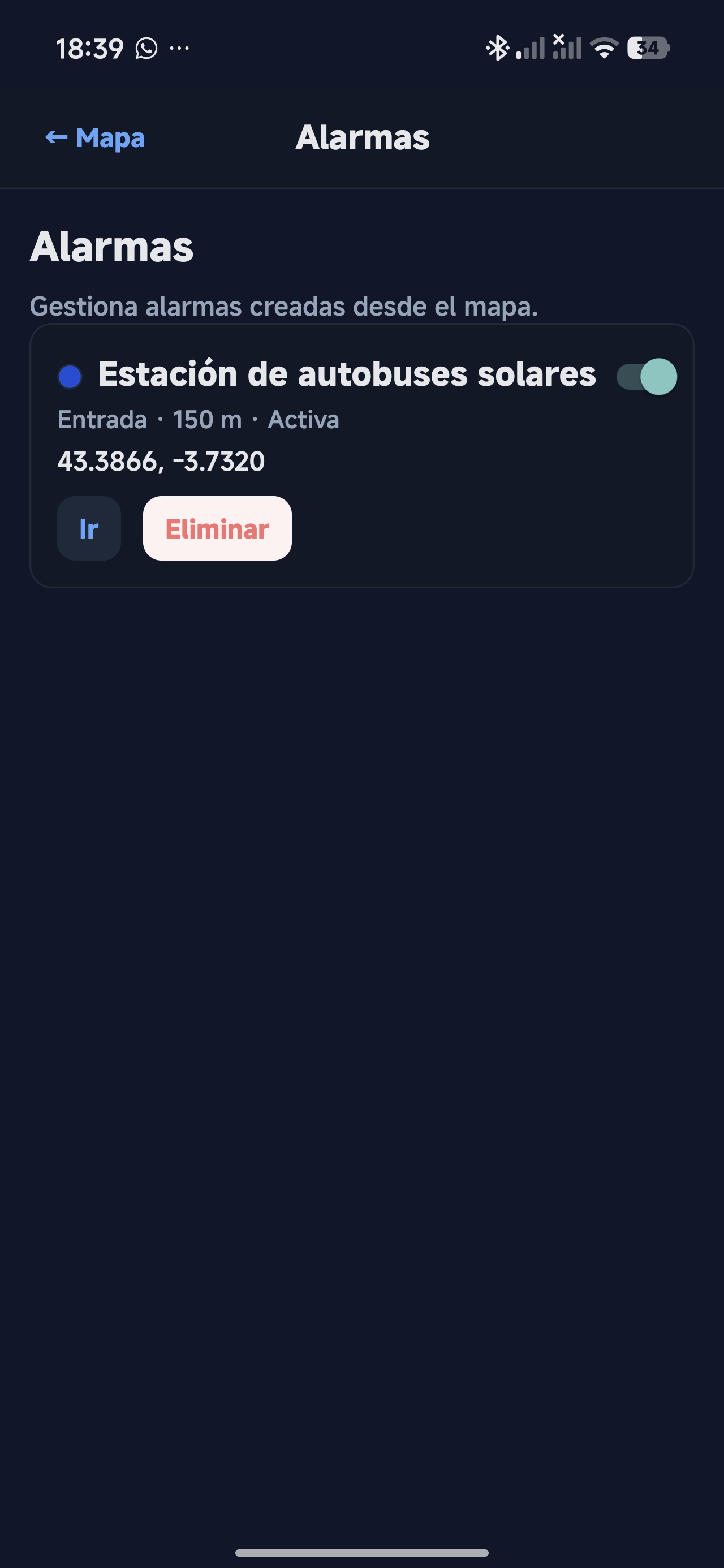
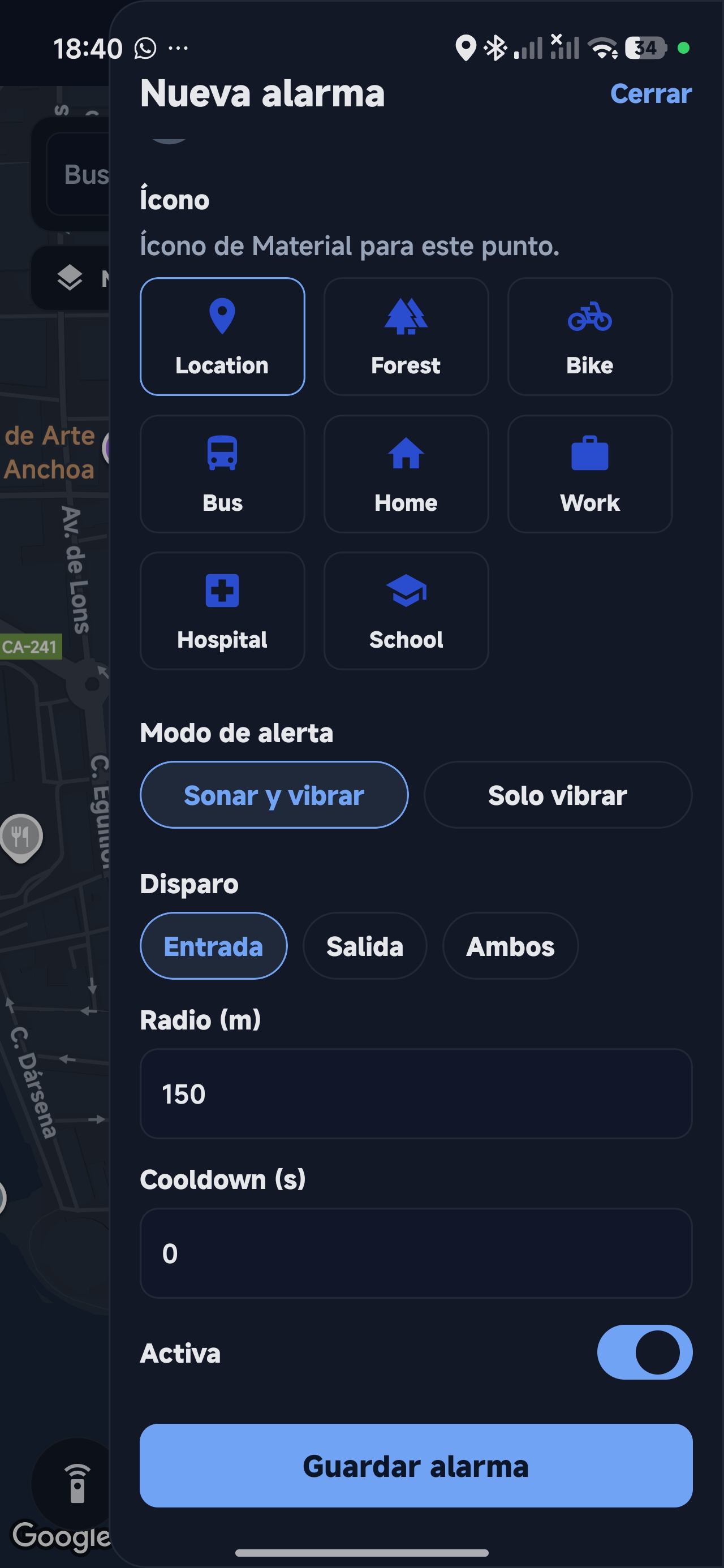
- Create alarms when entering or leaving areas with configurable radii.
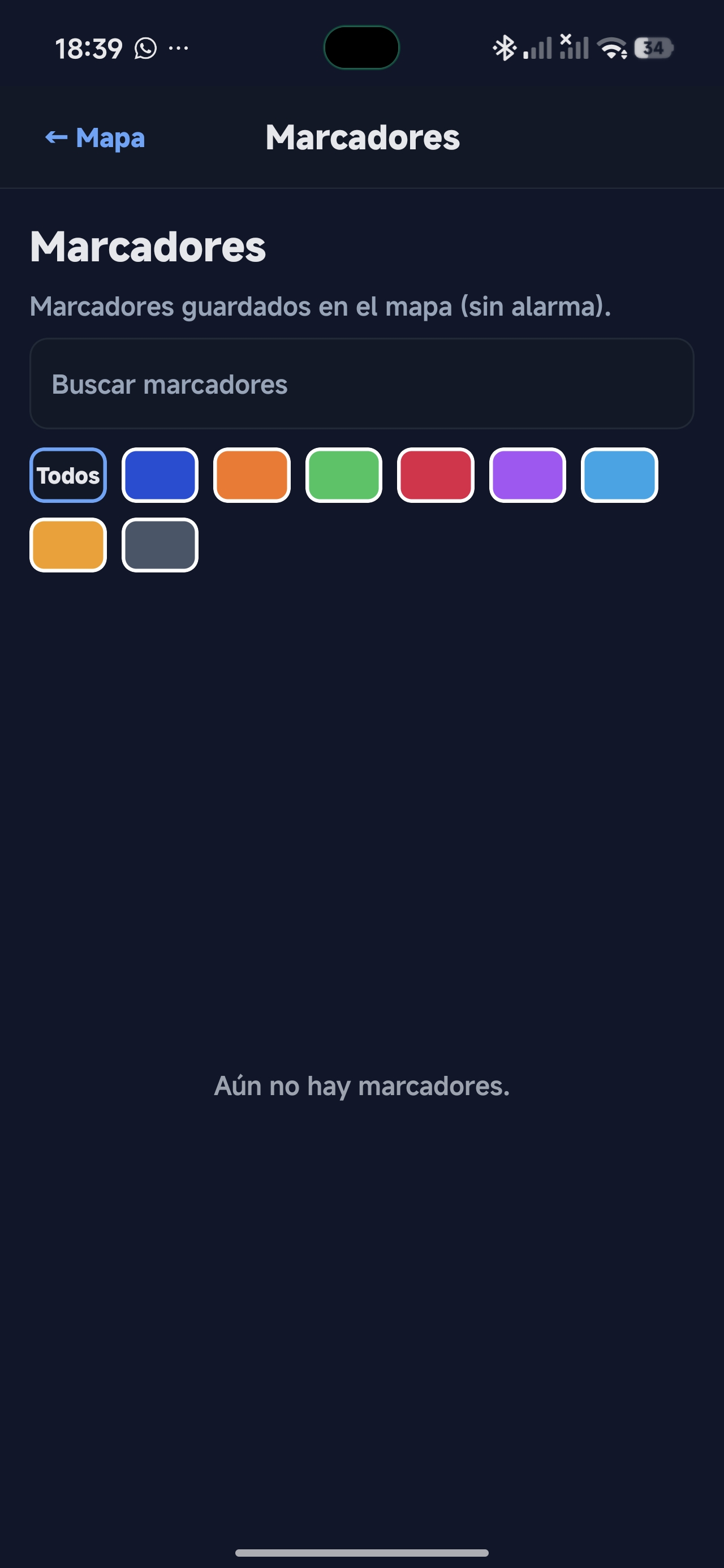
- Reuse bookmarks and favourite points of interest.
Contexts and organisation
- Groups by scenario (work, shopping, travel and errands).
- Priorities and quiet periods based on time windows or context.
Accuracy and power use
- Dynamic sampling according to activity: stationary, walking or in a vehicle.
- Switch between high accuracy and power saving when the signal is poor.
Notifications and history
- Push notifications through Firebase Cloud Messaging with contextual payloads.
- Trigger and event history to investigate false alerts.
Technologies used
Frontend
- React Native / Expo
- Dark theming and mobile components
Backend / Services
- Firebase Firestore or Realtime Database
- Cloud Functions (processing and validation)
- Firebase Authentication
- Firebase Cloud Messaging
Geolocation
- Native location APIs and geofencing
- Activity detection (stationary, walking or in a vehicle)
Logic / Optimisation
- Adaptive sampling by context
- Accuracy filters and battery controls
- Reducing false alerts with dynamic thresholds
Architecture at a glance
The application captures location and activity and decides locally when to trigger alarms for low latency. Events are synchronised in Firestore/RTDB for history and consistency. Cloud Functions validates and enriches data; FCM delivers contextual notifications. The design balances client-side responsiveness with cloud services.
Use cases
- “When leaving home, remind me to visit the parcel shop 500 m away.”
- “When arriving at the office, silence personal notifications.”
- “When near the supermarket, show my shopping list.”
- “When approaching the bus stop, trigger an alert with an estimated time.”
- “When entering a safe area, unlock certain alarms.”
- “When in a vehicle, increase the radius to avoid brief interruptions caused by speed.”
UX and design decisions
- Guided geofence creation with suggested radii based on context.
- Accuracy and power profiles with balanced, precise and power-saving presets.
- Visible history to understand why an alarm was triggered.
- Real-time activity states to adjust tracking without intervention.
- Actionable notifications (silence, snooze or mark as false positive).
Vision / Next steps
- Smart offline mode with deferred synchronisation.
- Wearable integration for haptic alerts.
- Contextual alarms based on weather and calendar events.
- Route optimisation and advance alerts using lightweight client-side AI.
Current status
Approaching release. The owner confirms that GeoAlarm has completed its development stage and is preparing for launch. Public availability and a release date have not yet been announced.
Screenshot gallery
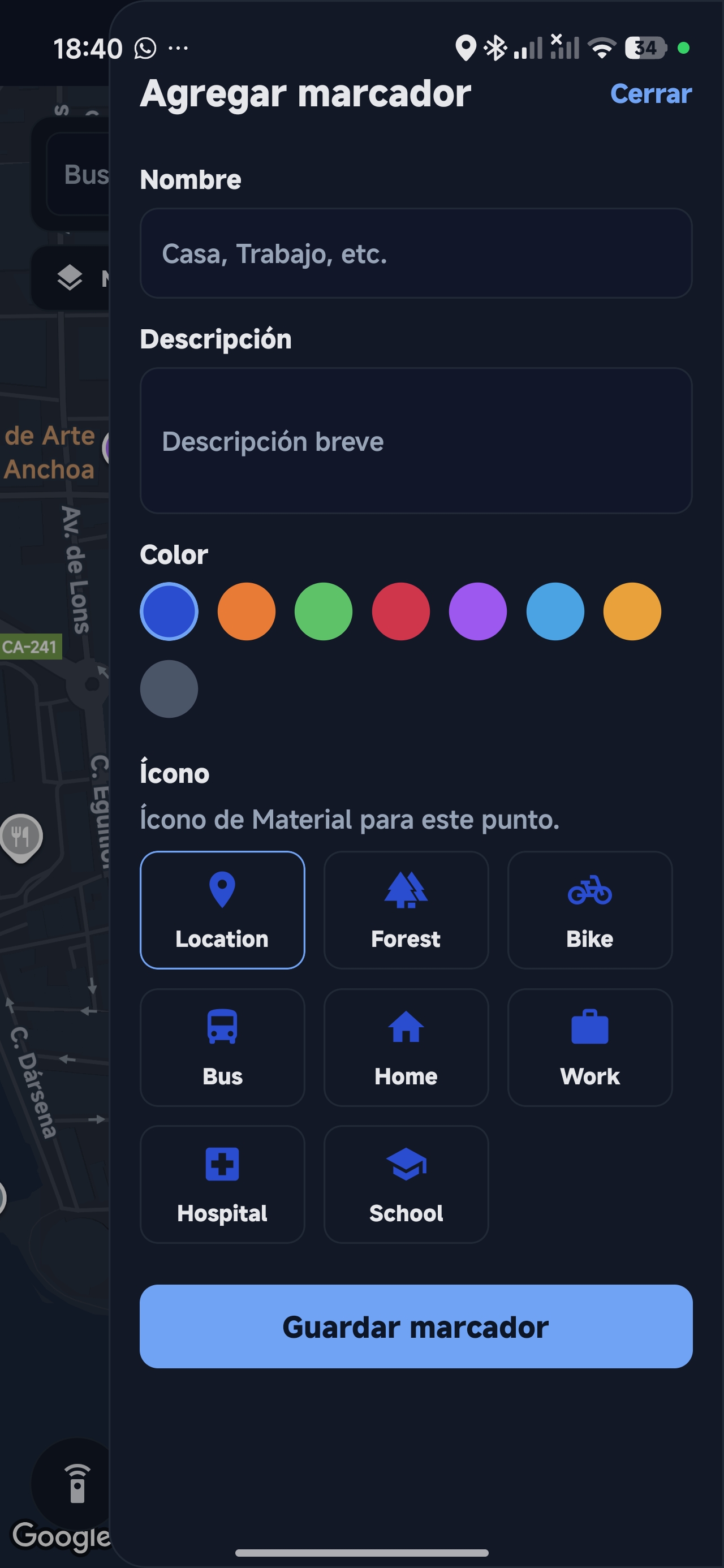
Drag to explore. A faster swipe rotates the carousel faster.